Advertisements
The federal government is actively committed to bringing new developments to Individual Microentrepreneurs (MEI) throughout Brazil.
With this move, Brazilian citizens who work informally will have the chance to negotiate their debts under favorable terms, thus expanding their financial possibilities.
This opportunity arises through “Desenrola Brasil”, established to reorganize Brazilians' debts, and is preparing for a major renewal.
The government identified that the funds allocated to the program do not cover the debts and expenses accumulated by MEIs.
Since they operate informally, it is essential for these professionals to invest in their operations and improve their work tools to achieve greater visibility.
Therefore, a significant change is underway in the program. Although R$ 8 billion has already been allocated to this cause, information from Serasa shows that the total amount of debts and financial obligations reaches R$ 301.5 billion.
However, a new segment will emerge to accommodate the debts of MEIs. It is important to emphasize that the decision proposes that such debts, originating from MEIs, be put up for auction, where large corporations will be able to purchase them.
Read also: Desenrola Brasil begins second renegotiation phase: Find out who can benefit now
In this way, these companies will be able to apply more attractive interest rates to consumers, generating significant discounts on the final amount of the debts, benefiting both small and large businesses.
Now, would you like to learn more about the MEI category and its benefits? Follow us.
The advantages of maintaining a good credit reputation as an MEI
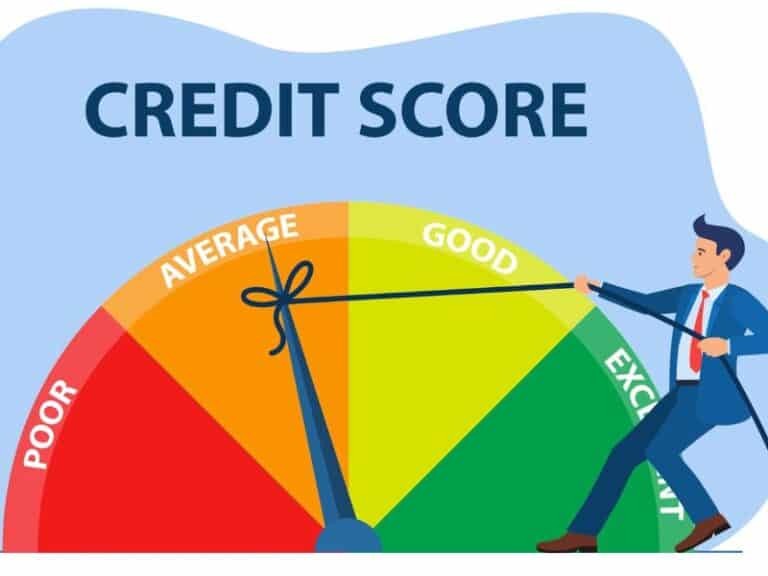
For Individual Microentrepreneurs (MEIs), preserving a positive credit reputation is essential.
This is because a good history provides access to microcredit and financing, valuable resources for those who work independently.
The reason is clear: obtaining these benefits is directly linked to your financial profile.
Therefore, by keeping your name clear and maintaining a high credit score with entities such as Serasa, your chances of obtaining loans increase considerably.
Therefore, ensuring that your CNPJ remains in good standing and monitoring your credit reputation is not only sound financial conduct, but also an effective tactic for opening pathways to opportunities and vital resources for the development and security of an MEI.
Simplifying entrepreneurship
The MEI offers a simplified and practical way for self-employed professionals and small business owners who want to legalize their operations.
By registering as a Microentrepreneur, independent workers obtain a CNPJ, enabling them to issue invoices and access the benefits of this legal category.
Read also: Desenrola Brasil: Debt Renegotiations Anticipated by Major Retailers
Additionally, this category has multiple benefits provided by the government and banks. Below, see some of the facilities offered by this segment:
- Simplified Taxation: As mentioned earlier, the MEI has a simplified tax regime, through a fixed monthly fee that covers taxes such as INSS, ICMS, and ISS, varying according to the activity;
- CNPJ: With MEI, you obtain a CNPJ, enabling you to issue invoices, open business accounts, and access financial and commercial services;
- Labor Rights: The MEI enjoys social security benefits, such as retirement, sickness benefit, and maternity benefit;
- Simplified Registration and Management: Registration is straightforward and can be completed online. Maintenance consists solely of paying the monthly DAS, avoiding the complexity of multiple tax obligations;
- Accessible Credit: Formalization makes it easier to obtain loans and financing, as tax compliance and the CNPJ strengthen trust with banks.
It is crucial to highlight that one of the MEI’s greatest attractions is the simplicity of regularization. In addition, the process of starting a microenterprise is entirely digital, eliminating traditional bureaucracy.
In conclusion, to remain in this category, it is enough to pay a fixed monthly fee, which represents the taxes related to the service provided. These taxes are collected through the DAS (Simplified Collection Document).