Advertisements
Following the Central Bank's recent statement last Monday (7), Drex is positioned to reduce transaction costs. Check it out!
Last Monday, the Central Bank (BC) announced that it intends to launch Brazil's first digital currency, called Drex (Digital Real X), by the end of 2024. The BC itself will issue this currency, complementing the current physical currencies.
The monetary authority is already conducting the first experiments for introducing this innovation, sparking curiosity about how it operates and its potential to make financial transactions more accessible.
It is important to emphasize that Drex represents the real, but in its digital version. Its value will correspond to that of physical banknotes, and the BC will manage it entirely. Users will access the Digital Real through blockchain technology. Continue reading for more details.
How does the Drex digital currency differ from PIX transfers?
Read also: Learn everything about Values to Receive
As highlighted, Drex’s objective is to facilitate transactions involving significant amounts. For example, holders will be able to carry out operations without relying directly on a bank.
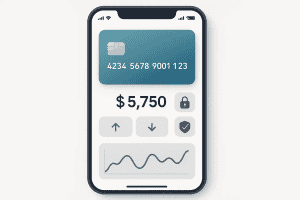
The reason? The funds will be held in a digital wallet on the smartphone. Thus, users will no longer depend on mechanisms such as DOC and TED, which are so common in banks nowadays. However, it will also be possible to use Drex for small payments via Pix.
In this context, Orli Machado, CEO of C&M Software and an expert in interbank clearing, commented in a conversation with Jovem Pan: “there will be offline operations; you won’t need to be connected to your bank”.
Learn more about Drex
Read also: Digital Real: Governments Assess Changes to Benefit Payments. Find Out!
The Central Bank announced several measures on Monday (7) to improve Brazil’s financial environment. Many experts had already discussed Drex as a revolutionary method for carrying out transactions in the country.
Therefore, Drex emerges with the aim of ensuring some essential services:
- Integration of bank accounts, cards, and paper money;
- Automated money;
- Configuration of transfers for specific purposes;
- And other new features.