Advertisements
ICMS is the acronym for Tax on the Circulation of Goods and Services, a state tax present throughout Brazil.
This tax is charged on the movement of goods, both physical and digital, and on the provision of services. It is considered one of the main sources of revenue for the states and the Federal District.
Importance of ICMS
The importance of ICMS to the national economy is undeniable. This tax accounts for a large part of state revenue, allowing states to invest in infrastructure, healthcare, education, and public safety, as well as finance their social programs.
Without ICMS, the states would face great difficulties in maintaining their services and investing in improvements for the population.
Impact on consumers
However, ICMS also has a significant impact on Brazilians' wallets. This is because this tax is passed on to the final price of products and services; in other words, it is the consumer who bears the cost.
As each state has its own ICMS rate, this causes product prices to vary according to the region. As shown in the table below:
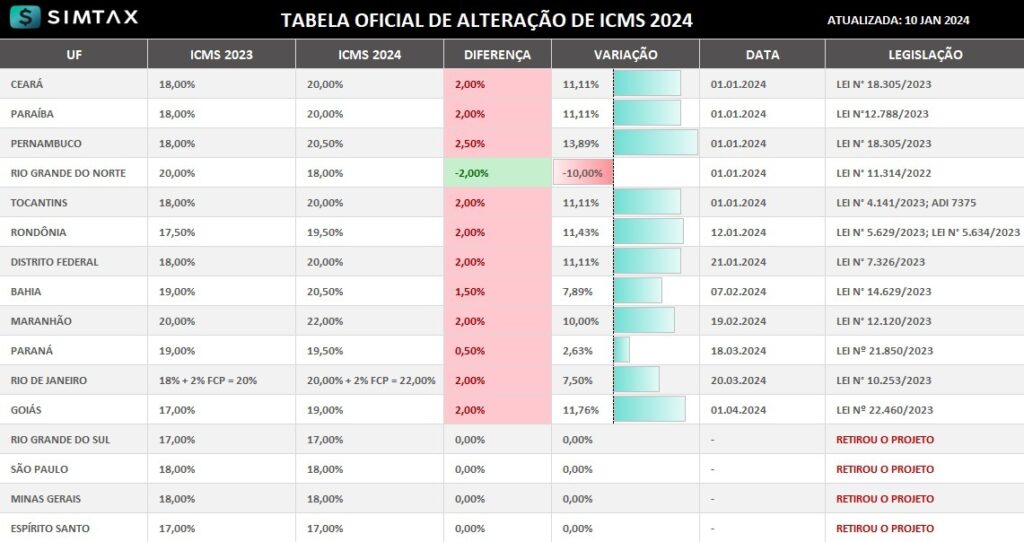
A practical example of how ICMS affects Brazilians’ wallets is the case of fuel. The amount of ICMS charged on gasoline may vary from one state to another, which explains the price differences found at gas stations in different regions of the country.
In addition, this tax also applies to electricity, cooking gas, food products, among others.
As a result, consumers end up paying more for products and services because of ICMS rates.
This can have a direct impact on quality of life, especially for low-income Brazilians, who have fewer resources to cope with constant increases in product prices.
The complexity of the Brazilian tax system, combined with the high tax burden, means that ICMS is just one of the many taxes that affect Brazilians’ wallets.
However, its scope and importance to the national economy make it a central element in the discussion about the need for tax reform in the country.
Image: Canva / Editing: Roberta de Oliveira