Advertisements
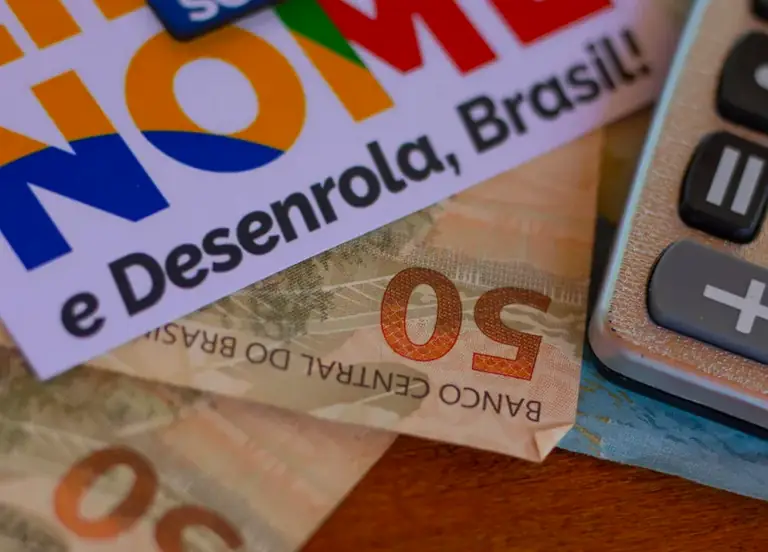
Experts are concerned about the repetitive cycle of debt after renegotiation. The Desenrola program, a federal government initiative to settle debts, could become a trap if millions of Brazilians who regain their creditworthiness in the market do not know how to manage their financial resources, experts told InfoMoney.
In its launch month, Desenrola reached R$ 9.5 billion in financial agreements, solely in Tier 2, where indebted individuals address their bank-related liabilities directly with banks under special conditions, the Brazilian Federation of Banks (Febraban) recently announced.
Febraban clarifies that this category includes customers whose monthly income is above 2 minimum wages and below R$ 20,000 and who are not part of the Federal Government's Cadastro Único.
From July 17 to August 18, debt negotiations resulted in 1.5 million agreements, reaching approximately 1.1 million bank customers. Participation in the program will remain open until December 31.
In September, the second phase of the project aims to help consumers earning up to two minimum wages or who are registered in the Cadastro Único. This lower-income segment will have the opportunity to settle debts of up to R$ 5,000 of various types.
Results and Impact of the Desenrola Program
Read also: Desenrola Brasil: Debt Renegotiations Anticipated by Major Retailers
“Initially, the goal is to reduce the number of people in default. However, many move from default to new debt through renegotiation. This means that they take on another financial commitment,” highlights Cintia Senna, a finance specialist and doctoral candidate at Florida Christian University (FCU).
Statistics from the National Confederation of Trade in Goods, Services and Tourism (CNC) reveal that the percentage of indebted households in Brazil fell slightly from 78.5% in June to 78.1% in July. This is the first decline since November 2022, and the CNC credits Desenrola as the reason for it.
“Without good financial management and a structured budget, it is very likely that this individual, who resolved their previous debt, will fall back into the same situation because they are unable to handle the new installments or because they take on other debts,” analyzes Luan Correia, a senior financial education specialist at Unicred.
Economist Ione Amorim points out that the program may be dangerous for consumers because it focuses on the symptom rather than the root of the problem.
“Individuals negotiate directly with banks. They often have several creditors, receive various offers, and must decide on the best course of action. When were they prepared for this? Did they receive the necessary financial preparation? This approach to dealing with debt is not effective,” questions the specialist, who also leads Idec (Brazilian Consumer Defense Institute).
Challenges in Financial Management and the Need for Education
Due to a lack of skill in handling finances, many consumers, when participating in programs such as Desenrola, do not properly analyze the proposals and, pressured by necessity, accept terms that are not beneficial.
“Recently, I handled a case related to Desenrola: a person had a debt of R$3,000. The offer was 96 installments of R$187. Nearly R$18,000. Eight years of paying an amount six times higher simply because the installment was “affordable.” They could have waited for the next phase of the program or assessed the offer more carefully, but due to a lack of preparation, they became even more indebted,” reports Ione Amorim.
For this reason, the economist advocates financial education for those who provide credit. “Many in the market provide credit and carry out renegotiations in an exorbitant and exploitative manner. The relationship with the customer still takes place through continuous dependence on credit: the customer becomes as indebted as possible, faces financial difficulties, and renegotiates. In some cases, they never manage to pay off the amount,” she criticizes.
According to her, the relationship should be established in the short term. “Use credit, pay off your debt, and be ready to request more credit. A truly good payer is someone who starts and completes their payments,” says Amorim.
Financial education program could add value to Desenrola Brasil
According to the Ministry of Finance, Desenrola will offer a financial education course aimed at lower-income people in September.
“The course is essential so that those benefiting from the program understand how to prevent new episodes of indebtedness and credit restrictions,” the ministry states in a note, without detailing the content or how the public will be able to access the course.
The ministry states that Desenrola “provides a way to choose debt refinancing, making renegotiation more transparent and expanding users’ understanding of their financial situation. This process also represents a form of education, as individuals take ownership of it and restructure their financial condition”.
Although the program is primarily aimed at the lower-income bracket, it is a mistake to think that only the poorest face a lack of financial education.
“It is enough to look at the number of agreements in Desenrola at this stage: individuals earning up to R$ 20,000 who nevertheless are in debt because they do not manage their resources properly,” highlights Correia, from Unicred.
It is worth noting that, among the most disadvantaged, inequality at various levels significantly affects the budget. “Unemployment, health problems, and the lack of widespread access also have an influence,” observes Senna.
Is having debt a bad thing?
Read also: Digital Real: Governments Assess Changes to Benefit Payments. Find Out!
Having debt in itself is not a bad thing. Often, debt can be a tool for achieving a goal, such as buying a home or investing in education. The issue is knowing how to manage that debt in a healthy way, without letting it become a snowball.
“Ideally, debt should not exceed 30% of an individual’s monthly income. Above that, the situation can get out of control,” advises Correia.
“On the other hand, debts incurred due to consumerism, without a defined purpose, are harmful. It is essential to understand the difference between wanting and needing,” concludes Senna.