Advertisements
Bolsa Família is an initiative focused on the redistribution of resources, aiming to reduce poverty and promote social equity in Brazil. Families that meet the income standards and family characteristics determined by the Federal Government are the recipients of this assistance.
In 2023, the government updated the program, establishing a basic benefit of R$ 600 for each household and incorporating bonuses for households with children up to six years old, pregnant women, breastfeeding mothers, and young people up to 18 years old. The goal is to provide access to healthcare, education, and a high standard of living for these underprivileged communities.
Currently, the initiative reaches more than 20 million households. However, uncertainties about its regulations persist. A common question is whether individuals who do not have children can be covered. Let us look into this further.
Read also:Bolsa Família Adjustment for Next Year: What to Expect?
Who is entitled to Bolsa Família?
First of all, it is crucial to understand the Bolsa Família criteria to identify who may benefit. To be eligible, the average income per family member must not exceed R$ 218 per month. This suggests that the combined income of everyone in the household, divided by the total number of members, must not exceed this amount.
An additional detail is the need to register with CadÚnico (the Federal Government's Unified Registry System for Social Assistance), keeping all information up to date. This registry is a tool that maps Brazilian families living in precarious conditions.
To remain in the program, families must also fulfill certain obligations in the areas of health and education, such as ensuring that children are vaccinated, following nutritional guidelines, ensuring prenatal care for expectant mothers, and making sure that their children attend school.
Is it possible to receive Bolsa Família without having children?
Yes, having dependents is not a prerequisite for qualifying for Bolsa Família. As long as the other criteria are met, it is possible to receive the standard amount of R$ 600, even without children. However, those with dependents may receive bonuses depending on the age group and situation of the young people.
For illustration: a household with an infant up to six years old may receive R$ 750 (R$ 600 + R$ 150) per month. A household with two adolescents between 7 and 18 years old is entitled to R$ 700 (R$ 600 + R$ 50 + R$ 50) per month. A household with an expectant mother may receive R$ 650 (R$ 600 + R$ 50) per month.
How do I apply for the benefit?
To apply for Bolsa Família, the person responsible for the household must visit the CRAS (Social Assistance and Reference Center) in their place of residence. During the visit, it is mandatory to present documents for everyone in the household, such as an ID card, CPF, work card, and proof of residence.
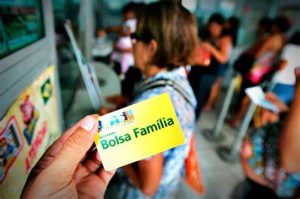
After registration, the Ministry of Social Development (MDS) assesses whether the household meets the stipulated standards. If approved, the family will receive a magnetic card to withdraw the benefit, either at a Caixa Econômica Federal branch or lottery outlet.
Once selected, the family is responsible for keeping its information up to date and complying with the program's commitments. If it fails to do so, the benefit may be paused or terminated.
Read also:Bolsa Família will pay an additional amount to THESE people
Payment schedule
Caixa Econômica Federal manages Bolsa Família payments and establishes a schedule based on the last digit of the beneficiaries' NIS (Social Identification Number). Usually, the amounts are deposited in the second half of the month, except in December, when this occurs earlier.
October payments began on the 18th and will continue through the 31st. See the specific dates:
- Final NIS digit 1: October 18;
- Final NIS digit 2: October 19;
- Final NIS digit 3: October 20;
- Final NIS digit 4: October 23;
- Final NIS digit 5: October 24;
- Final NIS digit 6: October 25;
- Final NIS digit 7: October 26;
- Final NIS digit 8: October 27;
- Final NIS digit 9: October 30;
- Final NIS digit 0: October 31.
Beneficiaries can withdraw the amounts at different locations, such as lottery outlets and Caixa branches. They can also manage the funds remotely through the Caixa Tem app, carrying out various banking transactions.